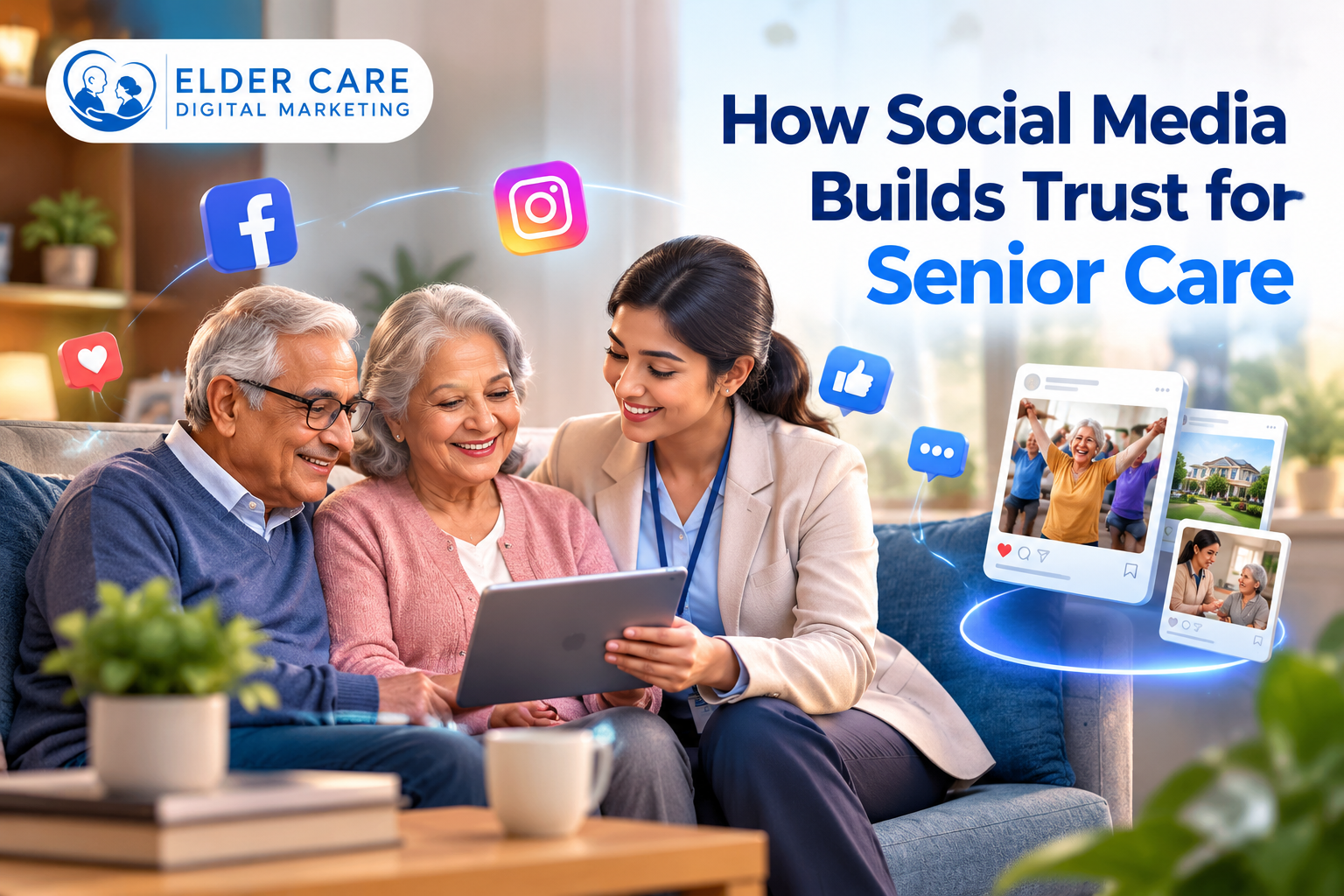
How Social Media Builds Trust for Senior Care
Social media helps senior care providers build trust by showcasing real facilities, staff, activities, testimonials, and helpful information that gives families confidence in their care decisions.
Choosing senior care is one of the most emotional decisions a family can make. When families look for an old age home, assisted living facility, retirement community, or senior care service, they are not simply comparing prices or facilities. They want to know whether their parents or loved ones will be treated with respect, kindness, patience, and dignity.
Today, families often explore social media before making that decision. They look at photos, videos, reviews, activities, staff interactions, celebrations, and everyday moments to understand what life is really like inside a senior care facility.
This is why social media marketing for old age homes has become an important way for senior care providers to communicate with families and build confidence before the first enquiry.
Social media gives senior care providers an opportunity to show their environment instead of simply describing it. A well-maintained profile can answer many of the questions families have before they ever make a phone call.
Why Trust Matters So Much in Senior Care
Senior care is different from many other services because families are placing someone they love in another person’s care. This creates a higher level of emotional involvement.
A family may want to know:
Is the environment safe?
Are caregivers respectful?
Are residents happy?
Is the facility clean?
What activities are available?
How does the staff interact with residents?
Will my parent receive personal attention?
What happens during emergencies?
Are meals and daily routines properly managed?
Can I visit regularly?
A website can provide answers to some of these questions, but social media can make those answers feel more real.
Seeing residents participating in activities, celebrating birthdays, enjoying festivals, exercising, reading, or spending time together can give families a better understanding of the atmosphere.
Trust develops when people can see consistency between what a senior care provider says and what it actually does.
Social Media Shows the Human Side of Senior Care
Senior care should never look like a simple business transaction. Families want to see the human side of the organization.
A social media page can show caregivers helping residents, staff celebrating special occasions, group activities, family visits, cultural events, and everyday interactions.
These moments can communicate something that a long paragraph cannot.
For example, instead of simply saying, “Our staff provides compassionate care,” a short video showing a caregiver patiently assisting a senior during an activity can make that statement much more believable.
Real moments create emotional connections.
However, senior care providers should always respect residents’ privacy and obtain appropriate permission before publishing photographs or videos.
Real Photos Can Build More Confidence
Families are naturally cautious about highly edited promotional images. They want to understand what the facility actually looks like.
Using genuine photographs of common areas, bedrooms, gardens, dining spaces, activity rooms, and events can make a social media profile more transparent.
Photos should be clear, recent, and relevant.
Instead of posting only stock photographs of smiling seniors, facilities can show their actual environment.
This can help families understand:
What the rooms look like
How residents spend their time
What facilities are available
How activities are organized
What the common areas look like
How the environment feels
Authentic content makes it easier for families to imagine their loved ones living there.
Videos Can Give Families a Better Experience
Video is especially useful for senior care because it can show movement, interaction, and atmosphere.
A short video tour can introduce different areas of a facility. Activity videos can show how residents spend their day. Staff introductions can help families become familiar with the people responsible for care.
Videos can also answer questions before families ask them.
For example, a simple “A Day at Our Senior Care Home” video could show:
Morning routines
Breakfast time
Exercise or wellness activities
Social activities
Lunch
Rest time
Evening activities
Family visits
This type of content gives prospective families a realistic picture of daily life.
Educational Content Helps Families Make Better Decisions
Not every social media post needs to promote a service.
Senior care providers can build credibility by sharing useful information that helps families understand ageing and care requirements.
Topics can include:
Signs that an elderly parent may need additional support
How to choose an old age home
Questions to ask during a facility visit
How families can support senior citizens emotionally
Benefits of social activities for seniors
Importance of regular physical activity
How to maintain healthy routines in old age
What families should know about assisted living
How to prepare a parent for a new care environment
Helpful information positions the facility as a knowledgeable resource rather than simply another service provider.
Resident Activities Can Create Emotional Connection
Activities are an important part of senior living.
Families want their loved ones to have a meaningful life, not simply a place to stay.
Social media can highlight activities such as:
Yoga and light exercise
Music sessions
Art and craft
Indoor games
Meditation
Reading sessions
Birthday celebrations
Festival celebrations
Gardening
Group discussions
Cultural programs
Movie sessions
Regularly sharing these activities helps families understand that residents can remain socially engaged and active.
It also gives existing family members an opportunity to see what their loved ones are doing.
Celebrating Festivals and Special Days Builds Familiarity
Festivals and special occasions can create some of the most engaging senior-care content.
Diwali, Holi, Ganesh Chaturthi, Independence Day, Republic Day, birthdays, anniversaries, and other celebrations can show the community atmosphere inside a facility.
These posts can make the organization feel warm and approachable.
For families considering senior care, seeing residents celebrating together can provide reassurance that their loved ones will have opportunities for social connection.
Staff Introductions Make a Facility Feel More Personal
Families often want to know who will be caring for their parents.
Introducing staff members through social media can reduce some of the uncertainty.
A staff introduction could include:
Name
Role
Experience
Area of responsibility
Approach to senior care
A short personal message
For example, a caregiver could explain why they enjoy working with senior citizens.
This type of content helps transform unfamiliar faces into people families can recognize and trust.
Reviews and Family Experiences Matter
People naturally look for experiences from others before making important decisions.
Testimonials can therefore play an important role in senior care marketing.
A genuine family testimonial can explain:
Why the family selected the facility
What their experience has been like
How staff members helped
What changes they noticed in their loved one
What they appreciate about the environment
Testimonials should be authentic and presented with permission.
Even a short video message from a family member can communicate confidence more effectively than a generic promotional statement.
Responding to Comments Shows That You Care
Trust is not built only through posts.
It is also built through conversations.
When people ask questions in comments or messages, responding politely and promptly demonstrates that the organization is accessible.
Families may ask about:
Availability
Visiting hours
Facilities
Location
Activities
Accommodation
Care options
Pricing
Admission procedures
A helpful response can move someone one step closer to contacting the facility.
Ignoring comments or taking too long to respond can create the opposite impression.
Social Media Can Help Families Before Their First Visit
A family may discover a senior care facility through a search, recommendation, advertisement, or social media post.
Before calling, they may visit the facility’s social media profile.
At that stage, the profile acts like a first introduction.
If the page contains recent activities, genuine photographs, useful information, testimonials, and clear contact details, the family can feel more comfortable reaching out.
On the other hand, a profile that has not been updated for months may create uncertainty.
Consistency matters.
Building Trust Through Consistent Content
One successful post is not enough to build a strong reputation.
Trust develops over time.
Senior care providers should maintain a consistent content mix instead of posting only promotional offers.
A simple weekly approach could include:
Monday: Senior care advice
Tuesday: Resident activity
Wednesday: Staff introduction
Thursday: Educational information
Friday: Facility feature
Saturday: Family testimonial or community story
Sunday: Wellness or motivational content
The exact schedule can change, but consistency helps keep the facility visible and familiar.
Transparency Can Reduce Family Concerns
Families may have concerns about senior care that they do not immediately express.
They may worry about cleanliness, food, staff availability, safety, loneliness, medical support, or communication.
Transparent content can address these concerns.
For example, a facility can explain its daily routine, introduce its team, show common areas, discuss activities, and explain how families can stay connected.
The goal is not to hide every challenge. The goal is to communicate clearly and honestly.
When families feel that a provider is open about its services, they may be more comfortable starting a conversation.
Local Social Media Presence Helps Families Find the Right Facility
Families usually search for care close to where they live or where other family members can easily visit.
For example, someone searching for senior care in Mumbai may want a facility that is convenient for regular visits.
Content can therefore naturally mention relevant service areas, neighborhoods, and nearby locations when appropriate.
This helps families understand whether the facility is suitable for their location and makes communication easier.
Paid Social Media Can Reach the Right Families
Organic social media content can build familiarity, while paid campaigns can help introduce senior care services to a wider relevant audience.
For facilities looking to generate enquiries, Meta Ads for old age homes in Mumbai can be used to promote services, facility tours, consultation opportunities, or informative content.
The strongest campaigns should focus on the needs and concerns of families rather than simply promoting a facility.
For example, an advertisement could invite families to learn what they should consider when choosing senior care.
This approach can make the first interaction feel more helpful and less sales-focused.
What Type of Content Builds the Most Trust?
A strong senior care social media profile should combine different content formats.
1. Real Facility Photos
Show actual rooms, common areas, gardens, dining spaces, and activity areas.
2. Short Videos
Use short videos to show activities, celebrations, staff interactions, and facility tours.
3. Educational Posts
Answer common questions families have about ageing and senior care.
4. Testimonials
Share genuine experiences from families and residents when permission is available.
5. Staff Stories
Introduce caregivers and other team members.
6. Community Activities
Show how residents spend their time and interact with others.
7. Frequently Asked Questions
Create posts answering common admission, facility, and care questions.
8. Behind-the-Scenes Content
Show preparation for events, meals, activities, or daily routines where privacy allows.
This combination makes a social media profile more informative and human.
Common Social Media Mistakes Senior Care Providers Should Avoid
Not every social media strategy creates trust.
Some mistakes can make a facility look less reliable.
Posting Only Advertisements
If every post says “Contact us today,” families may feel they are being constantly sold to.
Using Only Stock Images
Stock images can make the facility appear less authentic.
Inconsistent Posting
Posting frequently for a few days and then disappearing for months can reduce confidence.
Ignoring Questions
Unanswered comments and messages can make a business appear unresponsive.
Sharing Low-Quality Photos
Dark, blurry, or poorly framed images can create an unprofessional impression.
Ignoring Privacy
Resident photographs and personal information should never be shared without appropriate consent.
Making Unverified Claims
Avoid exaggerated promises about care, medical outcomes, or facilities.
Honest communication is always more valuable for long-term trust.
How to Turn Trust Into Genuine Enquiries
Building trust is important, but families eventually need a clear next step.
Every social media profile should make it easy to contact the facility.
Depending on the service, the next step could be:
Schedule a facility visit
Call the care team
Send a WhatsApp enquiry
Request pricing information
Ask about availability
Book a consultation
Learn about accommodation options
The call to action should be simple and relevant to the content.
For example, a post about facility tours could encourage families to schedule a visit rather than simply saying “Contact us.”
For families ready to discuss their requirements, a dedicated senior care consultation page can make the next step clearer.
Social Media Should Support the Entire Family Journey
Trust does not begin when a family submits an enquiry.
It begins much earlier.
A person may first discover a facility through social media, read an educational post, watch a video, check reviews, visit the website, speak with the team, and eventually visit the facility.
Social media can support every stage of this journey.
It can introduce the organization, answer questions, show real experiences, provide useful information, and encourage families to take the next step.
How Senior Care Providers Can Create a Stronger Social Presence
A successful social media presence does not require posting complicated content every day.
The focus should be on being useful, authentic, consistent, and human.
A senior care provider can start by asking:
What questions do families ask most often?
What concerns do new families have?
What activities do residents enjoy?
What makes our care environment different?
Who are the people providing care?
What does a normal day look like?
What would a family want to see before visiting?
The answers can become social media content.
For additional ideas, families and care providers can also explore senior care social media content that focuses on education, engagement, and trust-building.
Final Thoughts
Social media has become more than a platform for posting photographs. For senior care providers, it can become a window into the daily life, people, values, and environment of a facility.
Families want reassurance before making a decision about the care of someone they love. Real photographs, videos, staff stories, resident activities, educational information, testimonials, and helpful responses can gradually create that reassurance.
The most effective approach is not to make every post promotional. Instead, senior care providers should use social media to communicate honestly, answer questions, demonstrate care, and show the real experience behind their services.
When families repeatedly see genuine and useful content, an unfamiliar senior care provider can become a familiar and trusted option.
And when trust is established before the first enquiry, families are more likely to feel comfortable taking the next step.
For ongoing updates and senior care marketing content, you can also follow senior care marketing updates on Instagram.


Frequently Asked Questions
1. How does social media build trust for senior care?
Social media builds trust by showing families real information about a senior care facility. Photos, videos, staff introductions, resident activities, testimonials, and educational posts can help families understand the environment before making an enquiry or visiting.
2. What should senior care facilities post on social media?
Senior care facilities can share resident activities, celebrations, educational information, staff introductions, facility photographs, videos, testimonials, wellness tips, FAQs, and behind-the-scenes content. A balanced mix is generally more effective than posting advertisements alone.
3. Why are videos useful for senior care marketing?
Videos allow families to see the environment and interactions more realistically. Facility tours, activity videos, staff introductions, and daily routine videos can answer questions and give prospective families a better idea of what life at the facility is like.
4. Can social media help old age homes get more enquiries?
Yes. Consistent and useful social media content can increase awareness and encourage families to contact a facility. Paid campaigns can also help reach relevant audiences and direct interested families toward enquiries, consultations, or facility visits.
5. How often should a senior care facility post on social media?
There is no single ideal number for every facility. The important factor is consistency. A facility can start with several useful posts each week and maintain a regular schedule rather than posting heavily for a short period and then becoming inactive.
6. Should senior care facilities use resident photos?
Resident photos can help make social media content authentic, but privacy and consent are essential. Facilities should obtain appropriate permission before publishing photographs, videos, names, or personal information involving residents.
7. Do testimonials help senior care providers build credibility?
Yes. Genuine testimonials can help families understand other people’s experiences with the facility. Video testimonials can be particularly engaging because families can hear directly from someone who has already experienced the service.
8. Can social media help families choose an old age home?
Social media can help families with the initial research process. Families can use it to learn about activities, facilities, staff, environment, reviews, and communication. However, they should also visit the facility and verify important information before making a final decision.
9. Are paid social media campaigns useful for senior care facilities?
Paid social campaigns can be useful for increasing awareness and reaching relevant audiences. They can promote facility tours, consultations, educational resources, or specific senior care services and encourage interested families to make an enquiry.
10. What is the most important factor when using social media for senior care?
Authenticity is one of the most important factors. Families want to see genuine information rather than only promotional messages. Consistent, transparent, useful, and respectful content can help create familiarity and strengthen trust over time.